Brain-Computer Interfaces (BCIs) are no longer science fiction—they’re becoming reality, and Neuralink is leading the charge. By connecting the human brain directly to machines, BCIs promise to revolutionize healthcare, communication, and even how we interact with technology. This article explores how Neuralink and other BCI technologies are shaping a future where minds and machines merge, offering practical insights for businesses and curious minds in 2025.
What Are Brain-Computer Interfaces?
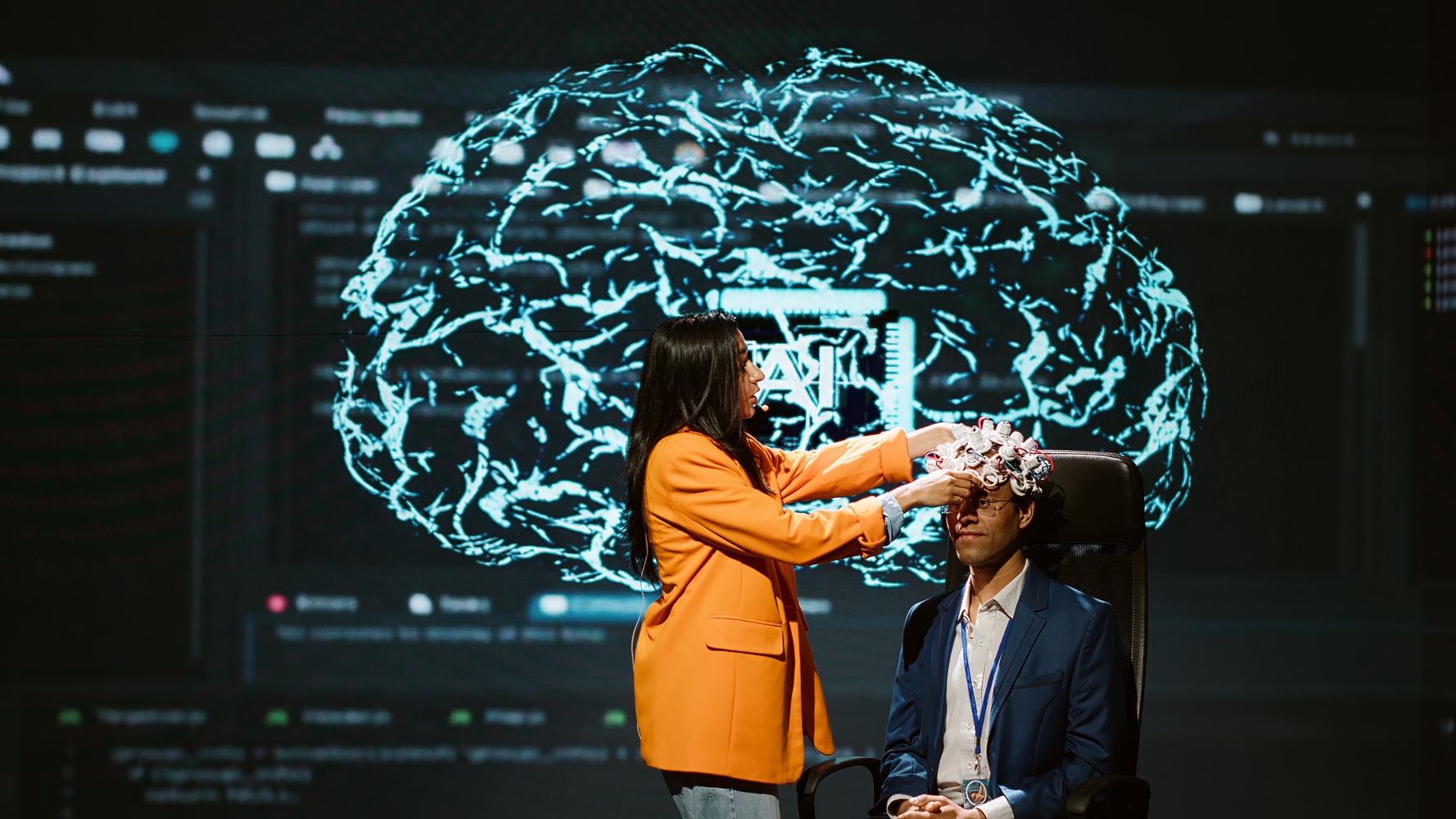
BCIs are systems that enable direct communication between the brain and external devices, bypassing traditional inputs like keyboards or touchscreens. Electrodes or implants detect neural signals, which software translates into commands for computers, prosthetics, or even virtual environments. Neuralink, founded by Elon Musk, aims to create high-bandwidth BCIs to treat neurological disorders and eventually enhance human cognition, merging our minds with artificial intelligence.
The Promise of BCI: Its Applications
The transformative potential of Brain-Computer Interfaces spans multiple sectors, offering unprecedented solutions and exciting new possibilities.
Revolutionizing Healthcare
BCIs are transforming medical treatment by addressing neurological conditions with remarkable precision and effectiveness.
- Restoring Mobility: Neuralink’s implants aim to help paralyzed individuals control devices like smartphones or robotic limbs using only their thoughts. Early trials in 2024 showed patients moving cursors on screens with brain signals alone, marking a significant leap in assistive technology. Beyond simple cursor control, the goal is to enable complex dexterous movements, allowing individuals to perform tasks like picking up objects or self-feeding. The advancement in neural decoding algorithms is key to translating intricate thought patterns into nuanced physical actions.
- Treating Neurological Disorders: BCIs show promise in managing chronic conditions such as epilepsy, Parkinson’s disease, and severe depression by stimulating specific brain regions. This offers highly targeted, non-invasive or minimally invasive alternatives to traditional pharmacological or surgical therapies, potentially reducing side effects and improving quality of life. Research is also exploring BCI applications in treating obsessive-compulsive disorder (OCD) and chronic pain, with promising preliminary results.
- Advanced Rehabilitation: For stroke patients and those recovering from traumatic brain injuries, BCIs are invaluable tools for rehabilitation. They facilitate neurofeedback, allowing patients to retrain neural pathways and regain motor function more rapidly by directly engaging their brains in the recovery process. Hospitals adopting BCIs report up to 25% faster recovery in motor function for some patients, making this a game-changer for rehabilitation medicine and significantly shortening recovery times.
Enhancing Communication
Imagine typing a message or controlling a virtual assistant with your thoughts. BCIs are making this possible, opening up new avenues for interaction.
- Advanced Assistive Communication: For individuals with severe speech impairments, such as those with Amyotrophic Lateral Sclerosis (ALS) or locked-in syndrome, BCIs can translate thoughts into text or synthesized speech with unprecedented speed and accuracy. This restores their ability to communicate complex ideas, emotions, and needs, profoundly impacting their daily lives and social interactions. Beyond text, the future could see direct brain-to-brain communication, a form of “telepathic” exchange of ideas.
- Streamlined Workplace Efficiency: Future applications could allow professionals to interact with software and databases instantly, streamlining complex tasks like data analysis, design, and coding. Imagine a surgeon accessing patient vitals on a holographic display with a mere thought, or an architect mentally manipulating 3D models in real-time. This could lead to massive productivity gains across industries, fostering a new era of hands-free and voice-free digital interaction.
- Seamless Digital Interaction: Neuralink’s vision includes enabling seamless communication with digital devices, moving beyond the current limitations of screens and keyboards. This could evolve into intuitive control of smart home systems, augmented reality interfaces, and even advanced robotics, making technology feel like a natural extension of our own minds. The ambition is to create a symbiotic relationship where human intent directly drives digital action without any physical intermediary.
Redefining Entertainment and Gaming
BCIs are set to elevate immersive experiences to entirely new levels, blurring the lines between reality and virtual worlds.
- Hyper-Immersive Gaming: VR headsets paired with BCIs could let players control avatars, manipulate environments, and even experience sensory feedback (e.g., haptic sensations, temperature changes) with their minds, creating unparalleled realism and engagement. Games could react to a player’s genuine emotional state, leading to dynamic narratives and personalized challenges. Startups like Neurable are already testing BCI headsets for gaming, hinting at a future where entertainment feels like an extension of your thoughts.
- Personalized Media Consumption: BCIs could adapt movies, music, and interactive stories to your emotional state or preferences, detected through neural patterns. This could lead to truly dynamic content that evolves in real-time based on your reactions, enhancing engagement and providing an unparalleled level of personalization. Imagine a film whose plot twists are subtly altered based on your level of suspense or surprise.
- Enhanced Creative Expression: Artists, musicians, and designers could leverage BCIs to directly translate their thoughts and emotions into digital creations. Imagine composing music by simply thinking notes and melodies, or painting intricate digital landscapes with pure mental imagery. This could unlock new forms of artistic expression and accelerate creative processes significantly.
Boosting E-Commerce with BCI Integration
For online businesses, BCIs open up unprecedented possibilities for understanding consumer behavior and personalizing the shopping experience.
- Hyper-Personalized Shopping Experiences: By analyzing neural responses to products, advertisements, and Browse interfaces, BCIs could tailor product recommendations, website layouts, and promotional offers to a customer’s subconscious preferences in real-time. This level of personalization would go beyond click history, delving into genuine interest, significantly boosting conversion rates and customer satisfaction.
- Intuitive and Frictionless Navigation: Shoppers could browse e-commerce platforms mentally, selecting items, adding them to carts, and completing purchases with just their thoughts. This reduces friction points, streamlines the checkout process, and makes online shopping incredibly efficient and accessible, particularly for individuals with motor disabilities. The entire shopping journey could become a seamless mental flow.
- Revolutionary Market Research and Product Development: BCIs can provide deeper, more objective insights into consumer behavior by tracking genuine neural reactions to new products, ad campaigns, and user interfaces. This eliminates the biases often present in surveys and focus groups, allowing businesses to refine marketing strategies, optimize product design, and identify true market demand with unprecedented accuracy. This could lead to products and services that are truly tailored to human needs and desires.
Preparing for a Mind-Machine Future
Neuralink and the rise of BCIs mark a turning point in human-technology interaction. Along with many other research groups and companies, BCIs are charting a course towards a future where the lines between human and machine may blur. The prospect of restoring lost abilities, enhancing human capabilities, and fundamentally changing how we interact with the digital world is both exhilarating and thought-provoking. From restoring mobility to redefining entertainment, these innovations promise a future where our thoughts shape the digital world. But with great potential comes responsibility—addressing privacy, ethics, and accessibility will be key. Businesses and individuals embracing BCIs now can lead the revolutionary potential of merging minds with machines.
This blog is brought to you by JackRabbit, offering digital marketing solutions focused on SEO, social media, hosting, and web design, empowering businesses to grow through advanced digital technology and data-driven strategies.