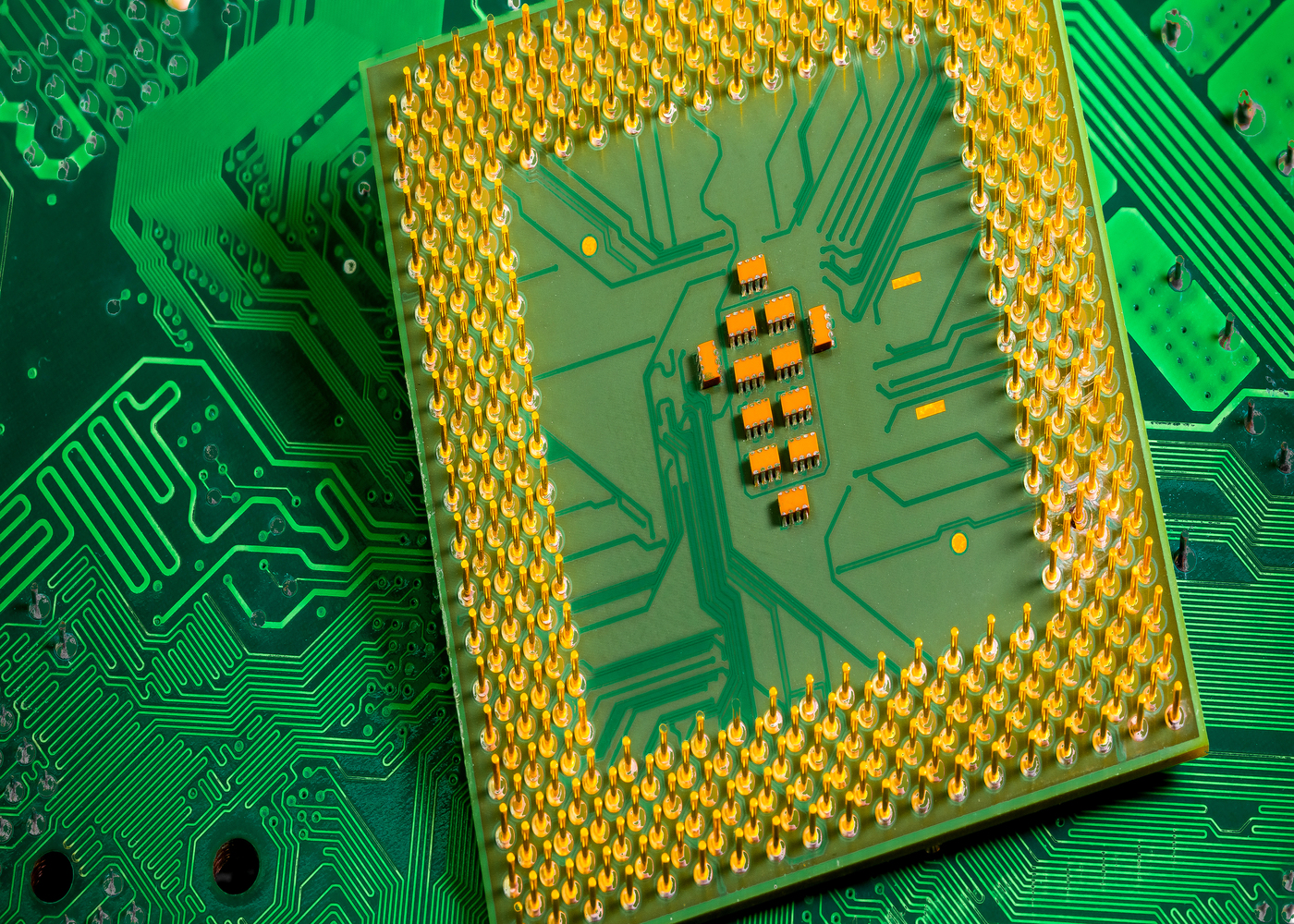
Imagine a world where medical breakthroughs happen at lightning speed, where materials with impossible properties are engineered daily, and where the most complex global challenges are optimized with unprecedented efficiency. This isn’t just a sci-fi fantasy anymore. With the unveiling of Google’s Willow chip, we’re witnessing a truly monumental leap in quantum computing, a development that could fundamentally redefine our future.
Beyond Bits and Bytes: Understanding the Quantum Difference
To grasp the significance of Willow, we first need a quick detour into what makes quantum computing so revolutionary. Our everyday computers, from your smartphone to the most powerful supercomputers, operate on “bits.” A bit is like a light switch – it’s either on (1) or off (0). All information is broken down into these binary states.
Quantum computers, however, use “qubits.” These aren’t just on or off; thanks to the bizarre rules of quantum mechanics, qubits can be both on and off simultaneously (a state called superposition) and even become intertwined with each other (entanglement), regardless of distance. This unique ability allows quantum computers to process exponentially more information than classical computers, opening doors to calculations that would take today’s supercomputers billions of years.
Enter Willow: A Breakthrough in Error Correction
The biggest hurdle in quantum computing has always been the fragility of qubits. They’re incredibly sensitive to their environment, and even the slightest disturbance can cause errors. This “noise” has been a major barrier to building practical quantum computers.
This is where Google’s Willow chip shines. Unveiled in December 2024, Willow boasts 105 qubits and represents a monumental breakthrough in quantum error correction. For nearly 30 years, scientists have grappled with the challenge of reliably reducing errors as more qubits are added to a system. Willow has seemingly cracked this code, demonstrating “below-threshold” error correction – meaning it can reduce errors exponentially as the number of qubits scales up. This is a game-changer because it means we can finally start building larger, more reliable quantum computers.
To illustrate Willow’s mind-boggling power, Google announced that it completed a complex benchmark computation in just five minutes. A task that would take today’s fastest classical supercomputers an astounding 10 septillion (10^25) years – a number that far exceeds the age of the universe!
How Willow Could Redefine Your Future
While still in its early stages, the implications of Willow’s advancements are staggering and could touch nearly every aspect of our lives:
- Drug Discovery and Healthcare: Imagine discovering new medicines for currently untreatable diseases at an unprecedented pace. Willow’s ability to simulate complex molecular interactions with extreme precision could revolutionize drug development, leading to cures for cancer, Alzheimer’s, and countless other ailments. Personalized medicine, tailored to an individual’s unique genetic makeup, could become a reality.
- Material Science and Energy: The development of new materials with previously unimaginable properties – super-efficient batteries for electric vehicles, lightweight aerospace alloys, or even room-temperature superconductors – could be vastly accelerated. Quantum computing could also unlock the secrets of fusion energy, providing a limitless, clean power source.
- Artificial Intelligence: The training of advanced AI models, which currently demands enormous computational resources, could become exponentially faster and more efficient. This could lead to breakthroughs in areas like real-time language translation, truly autonomous vehicles, and AI that can understand and interact with us in profoundly human ways.
- Financial Modeling and Optimization: From optimizing investment portfolios and detecting financial fraud to streamlining global supply chains and traffic flow in megacities, quantum computing could find the most efficient solutions to incredibly complex optimization problems.
- Cybersecurity: While quantum computers could potentially break some of today’s encryption methods, they also offer the promise of creating “quantum-resistant” encryption, ensuring the security of our data in an increasingly connected world.
From Lab to Reality
It’s important to remember that Willow, while a monumental step, is still a research prototype. Building a truly “useful, large-scale quantum computer” that can solve real-world problems commercially is still years away. Significant challenges remain, including developing even lower physical error rates and scaling up to vastly larger qubit arrays.
However, Google’s continuous progress, with Willow as its latest jewel, showcases a clear roadmap toward that future. The company’s “full-stack approach” – integrating hardware, software, and error correction – is paving the way for commercially relevant quantum applications.
The excitement surrounding Google’s Willow chip is not just hype; it’s a testament to the incredible potential of quantum computing to unlock solutions to problems previously thought impossible. As this technology continues to evolve, Google’s Willow chip is a powerful reminder that the future of computing is quantum, and it promises to redefine our world in ways we can only just begin to imagine.
This blog is brought to you by JackRabbit, offering digital marketing solutions focused on SEO, social media, web hosting, and web design, empowering businesses to grow through advanced digital technology and data-driven strategies.